
I accidentally discovered something that has made a huge difference in my sleep.
And honestly? I’m a little annoyed that I had to figure it out myself.
For a long time, I had one of those annoying sleep problems where I could fall asleep just fine—but then I’d wake up in the middle of the night.
Sometimes 3 AM. Sometimes 4 AM. Wide awake.
And once I was awake, my brain was apparently ready to have a staff meeting about every problem, project, idea and existential question I’ve ever had. 😂
So, like everyone else, I looked at the usual suspects.
Cortisol. Melatonin. Magnesium. Blue light. Evening routines. Stress. Vitamin D.
All the things.
I figured it was part of getting old.
Then I got my annual labs done. My Vitamin D and Protein were low. So were my hormones.
So I started with the low hanging fruit and started tracking my protein, and added 50k IU Vit.D once a week for 12 weeks.
While tracking my protein, here’s what I noticed.
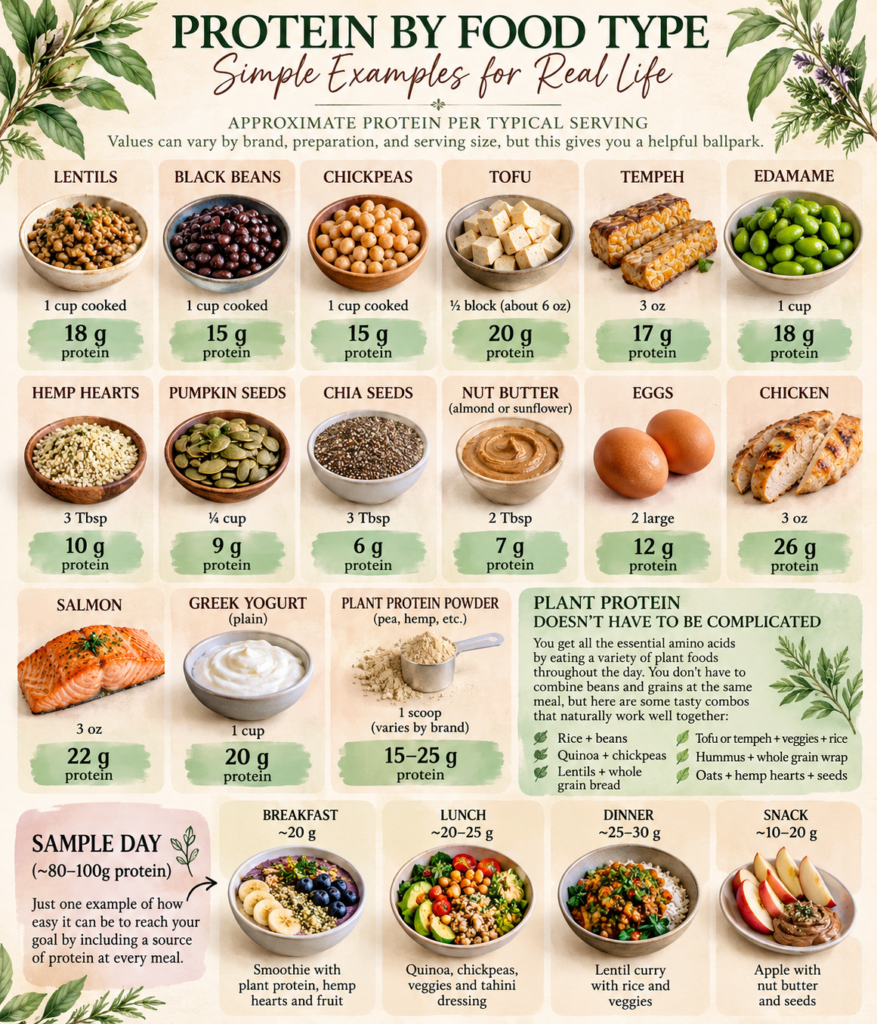
The general target I’d been suggested was around 80–100 grams a day.
And I have to tell you: that felt like A LOT.
Especially for someone who doesn’t particularly enjoy tracking food.
But I started noticing something.
When I got somewhere around 70 grams of protein or more, I was much more likely to sleep through the night.
When I didn’t?
There was a very good chance I’d be awake at 3 or 4 AM.
It happened often enough that I couldn’t really ignore it.
And that was the moment I thought:
Wait a minute. Is my sleep actually telling me something about how much protein I’m eating?
I don’t know that 70 grams is some magical universal number. I don’t think everyone needs exactly the amount I do.
But my body seemed to have a pretty clear opinion about my number.
And once I noticed the pattern, I wanted to understand why.
So… why might protein affect sleep?
There are a couple of interesting possibilities.
1. Blood sugar may be part of the story.
Your body doesn’t simply shut down for the night when you go to bed. You’re essentially fasting for several hours, and your body has to keep your blood glucose within a fairly narrow range while you’re sleeping.
If blood glucose drops too low, the body has mechanisms for bringing it back up—including releasing hormones such as cortisol and adrenaline.
And guess what those hormones can do?
Wake you the hell up.
This doesn’t mean every 3 AM awakening is caused by low blood sugar. And I’m definitely not claiming that protein magically prevents nocturnal hypoglycemia.
But it gave me a possible explanation for something I’d been experiencing.
A meal with adequate protein can also be more satiating and can change the way a meal affects digestion and blood glucose compared with eating mostly carbohydrates.
So perhaps part of my personal sleep equation is simply:
adequate protein → steadier overnight fuel → fewer reasons for my body to hit the alarm button.
Maybe.
And that’s important to me because I’m much more interested in what my body is actually doing than in blindly following a generic checklist.
2. Protein provides the raw materials your body needs.
Here’s another fascinating piece.
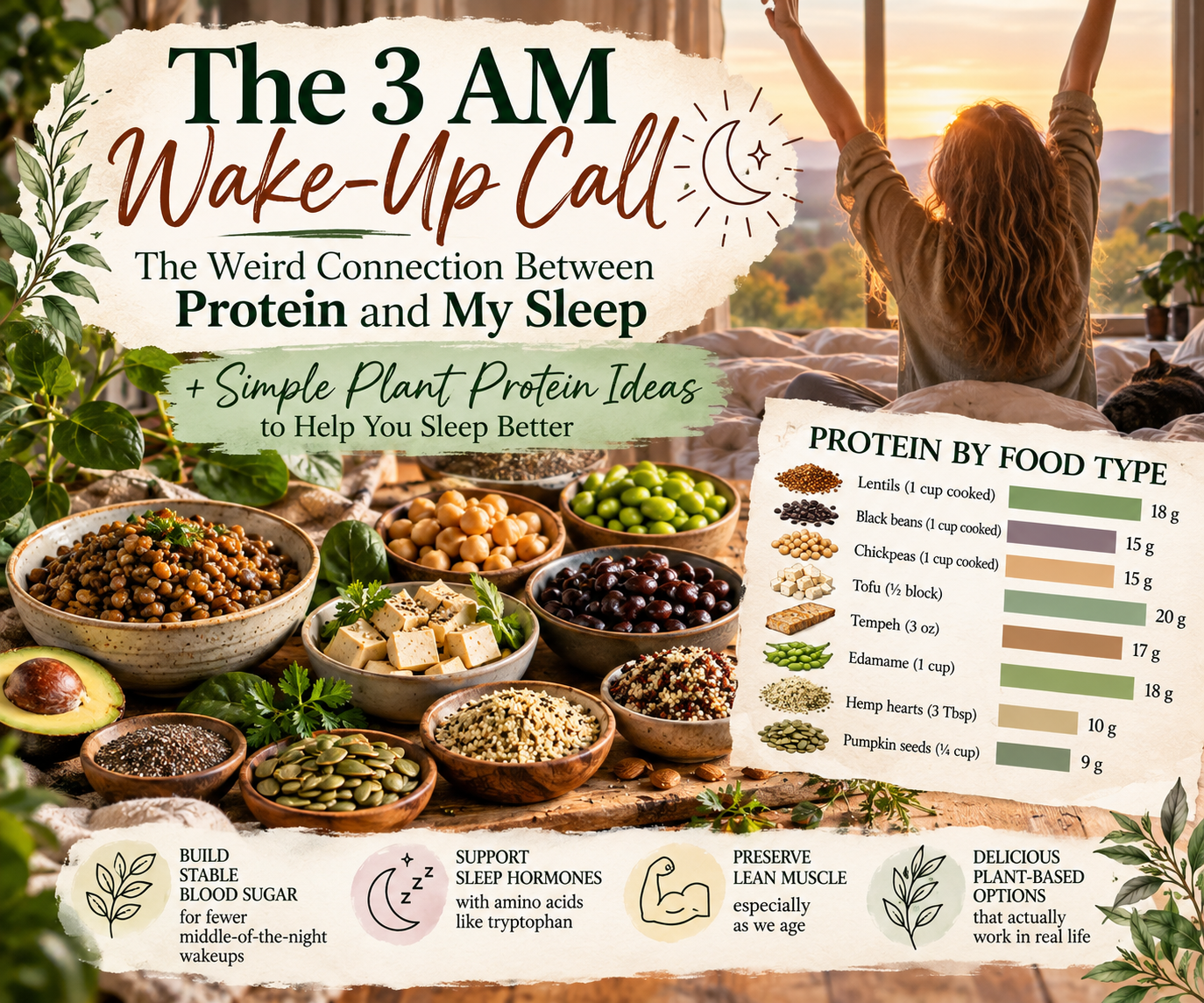
Protein gives us amino acids, including tryptophan, which is involved in the pathway that produces serotonin and, ultimately, melatonin.
That doesn’t mean:
“Eat more protein = make more melatonin = sleep like a baby.”
Human biology is never that simple.
But it does make sense that adequate protein—and therefore adequate amino acids—is part of having the raw materials the body needs to perform all of its normal functions, including those involved in sleep.
And as I get older, I’m realizing that nutrition isn’t just about avoiding deficiencies.
It’s about giving my body enough of the raw materials it needs to do what I am asking it to do.
Here’s the part I find most interesting.
I wasn’t trying to fix my sleep with protein.
I was trying to eat enough protein.
The sleep improvement was the side effect I discovered along the way.
And because I absolutely hate tracking food, I wasn’t looking for some perfect number to obsess over.
I was looking for a pattern.
And I found one.
For me, around 70 grams seems to be a meaningful threshold for sleep.
My goal is still closer to 80–100 grams because I’m also thinking about muscle maintenance and getting enough protein overall.
But 70 grams seems to be where my body starts saying:
“Okay. NOW we can sleep.”
😂
So what’s your sleep number?
This is where I think we sometimes get wellness advice backwards.
We get handed a list of things we’re supposed to do:
Take magnesium.
Turn off your phone.
Make the room colder.
Don’t drink caffeine.
Take melatonin. Or drink sleepy tea.
Do your breathing exercises, and yoga before bed.
And sure—some of those things may help. For a while. Or just once.
But sometimes the answer isn’t another sleep hack.
Usually a symptom in a sign that your body is asking for something much more basic.
Food.
Fuel.
Protein.
And maybe the most useful experiment isn’t buying another supplement.
Maybe it’s simply paying attention.
Try getting a little more protein during the day for a couple of weeks and see what happens.
Don’t assume my number is your number.
Don’t assume every middle-of-the-night awakening is a protein problem.
Just collect your own data.
Because that’s what changed this for me.
I stopped asking:
“What’s wrong with my sleep?”
And started asking:
“What is my body trying to tell me?”
And apparently, mine was saying:
“Girl. Eat your damn protein.” 😂